The short version
Most spider jobs in Fort Lauderdale cost a few hundred dollars. An inspection usually runs $75–$200.
- Inspections usually cost $75–$200.
- Recluse work costs more because it takes more visits.
- Sealing gaps and bug lights cut repeat visits.
- Compare what each quote covers, not just the total.
Anyone in Fort Lauderdale who's spotted a spider and wants to know if it matters.
What to look for
Spiders follow their food. More insects means more spiders. Most are harmless and even helpful. Fort Lauderdale is outside the brown recluse range, so most 'recluses' here are look-alikes. Webs and egg sacs keep the cycle going.
- 1Spiders wandering across walls at night.
- 2A shiny black spider with a red hourglass underneath.
- 3Spiders in bathtubs and sinks in late summer.
- 4Spiders in a damp basement or crawl space.
- 5Egg sacs, round or teardrop-shaped, tucked in eaves and frames.
- 6Small flying insects gathering under exterior lights.
Why it’s worth acting soon
- Egg sacs hatch hundreds of spiderlings.
- Webs build up in eaves, corners and garages.
- Widows nest under outdoor furniture and grills.
🧮
Estimate spider control cost in Fort Lauderdale
Adjust for your situation to see a ballpark range.
Estimated range
A rough guide only. Recluse work and recurring plans cost more.
Treatment options and typical costs
Inspection and Species Identification
$75–$200
The inspection maps webs, entry cracks and what the spiders eat. Everything that follows is built on that map.
- Time
- 45–90 minutes
- Best for
- Every job; the species decides how much to do
Exterior Perimeter Treatment and Void Dusting
$150–$350
Ask what product is used and why it fits your Fort Lauderdale situation. Labels vary, and the choice should be explained plainly.
- Time
- 45–120 minutes
- Best for
- Heavy exterior activity, widows or recluses confirmed
Sealing Gaps, Lighting and Prey Reduction
$150–$450
Bright white porch lights draw moths and midges, which draw spiders. Yellow bulbs away from doors make a real difference.
- Time
- 1–4 hours
- Best for
- Long-term reduction; homes near woods, water or fields
Monitoring and Follow-Up
$50–$150 per visit
Trap counts give an honest read. If numbers keep falling, the plan is working. If not, a good pro changes approach.
- Time
- 20–45 minutes
- Best for
- Confirming results; recluse or widow properties
Prices are typical published ranges. Ask what’s included before you compare quotes.
 Where brown recluses live, they like quiet spots under beds and furniture, so a flashlight check along the frame is worth a minute.
What spider control costs in Fort Lauderdale.
- A typical home in Fort Lauderdale is worth around $520k, and spider work is one of the cheaper pest jobs. Without recluses around Fort Lauderdale, most jobs are one-time work. - Inspection and Species Identification: $75–$200 - Exterior Perimeter Treatment and Void Dusting: $150–$350 - Sealing Gaps, Lighting and Prey Reduction: $150–$450 - Monitoring and Follow-Up: $50–$150 per visit
Local spiders conditions in Fort Lauderdale.
Fort Lauderdale sits in a tropical climate, and that sets the pace for spider activity here: late summer through fall (August-October). In Fort Lauderdale, the area is mostly urban, so spiders pressure can differ from one block to the next depending on how tight the entry points are and how much food, water, or shelter is close by. An inspection in Fort Lauderdale usually starts outside and works inward, checking the foundation, gaps around doors and windows, and any moisture or clutter near the structure first. Knowing Fort Lauderdale's seasonal timing lets you schedule treatment before the busy stretch rather than after it, which usually means faster service and a more accurate quote. A provider who works Fort Lauderdale and Florida every day can point out the specific conditions that matter most here, and getting the scope, price, and follow-up terms in writing makes it easier to compare options.
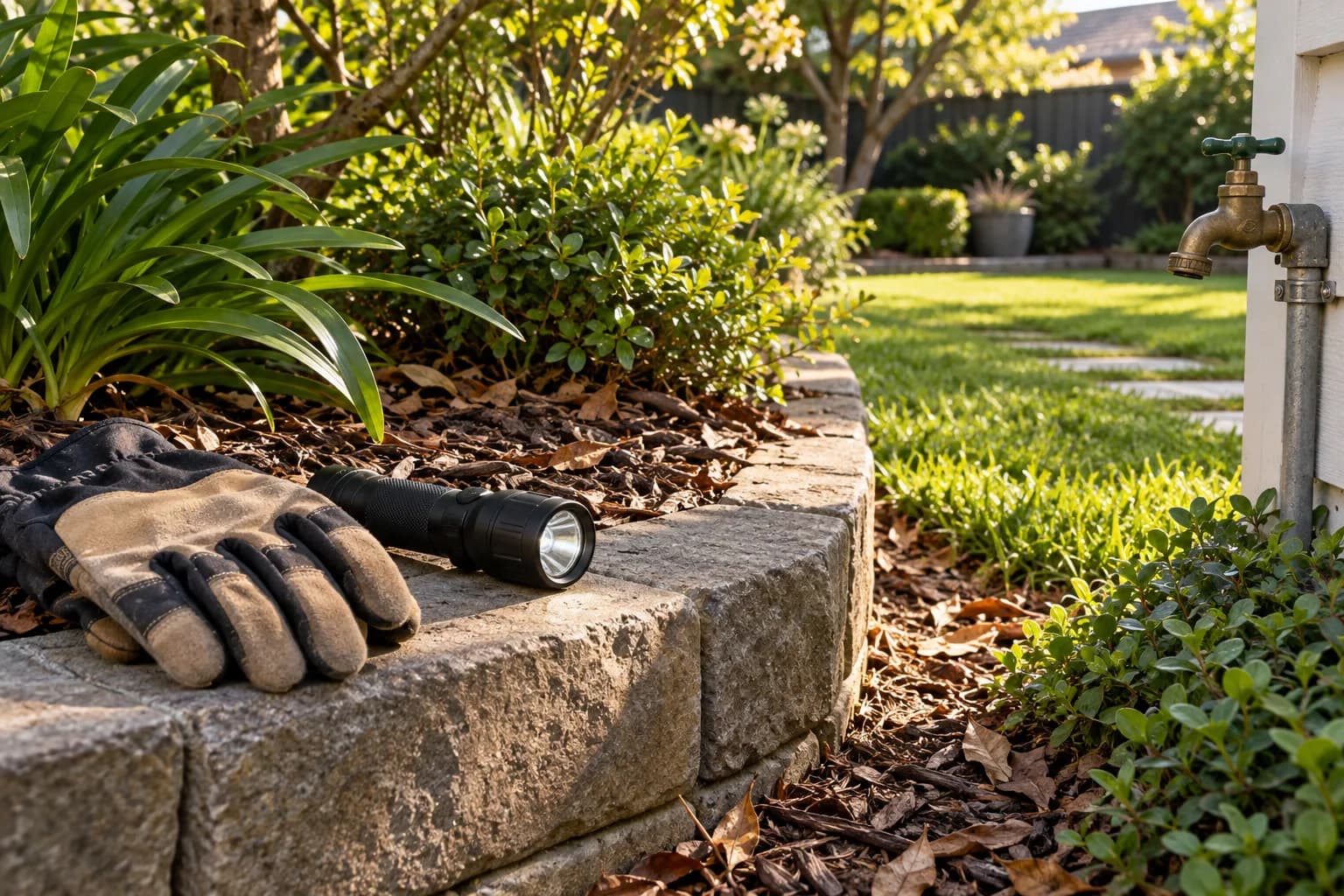 Dense shrubs, mulch and stone walls close to the house give spiders cover right up to the siding.
Which spiders live around Fort Lauderdale.
Most spiders in Fort Lauderdale homes are house spiders, cellar spiders, jumping spiders and wolf spiders. All are harmless to people. Black widows live in every lower-48 state. Around Fort Lauderdale, they're southern black widows, usually hiding under decks, grills and meter covers. Brown widows are also common around Fort Lauderdale. Their bite is milder than a black widow's. Brown recluses don't live around Fort Lauderdale. Most suspects turn out to be harmless look-alikes.
When you’ll see more of them.
Spiders peak in late summer and fall here. Many stay active all year. Winters are mild in Fort Lauderdale, with lows near 59°F, so spiders stay active most of the year. Spring brings a new hatch. Clear egg sacs in winter.
Where they hide in houses here.
Many homes in Fort Lauderdale sit on slabs, so the garage is the busiest spider spot. Check garage corners, door gaps and storage shelves. Look behind furniture and in closets.
A year of spiders in Fort Lauderdale.
- Spring: new spiderlings hatch. Vacuum webs and egg sacs. - Summer: highs near 90°F in Fort Lauderdale bring more insects, and more spiders. - Fall: males wander indoors. Peak spider season. - Winter: with lows near 59°F in Fort Lauderdale, a good time to clear clutter and seal gaps.
Harmless or worth a closer look?
- Black widow: shiny black, red hourglass underneath. Leave it alone. - Brown recluse: tan, violin mark on its back, plain legs. - Wolf spider: big, hairy and fast. Harmless. - Cellar spider: tiny body, very long legs. Harmless. - Jumping spider: small, fuzzy, hops. Harmless. - Orb weaver: big round web outside. Harmless.
If you think you’ve been bitten.
Wash the bite with soap and water. Use a cool compress. Raise the area if you can. See a doctor for severe pain, cramping or spreading redness. If you can, safely catch the spider for identification.
Fewer spiders, the easy way.
- Lights: yellow bug lights draw fewer insects. - Gaps: add door sweeps and repair screens. - Clutter: store things in sealed plastic bins, not cardboard. - Webs: vacuum webs and egg sacs every few weeks. - Shoes and gloves: shake them out before use. - Beds: keep them a few inches from the wall.
Webs outside: leave some, clear some.
- Garden orb weavers: leave them. They catch flies and mosquitoes. - Doorways and porch lights: brush webs away weekly. - Eaves and window frames: a long-handled brush works well. - Woodpiles: keep them off the ground and away from the house. - Gloves: wear them when moving firewood, pots or patio cushions.
Spider myths.
- Swallowing spiders in your sleep: no evidence it happens. - Daddy longlegs are deadly: no. They’re harmless. - Spiders move in for winter: most house spiders never leave. - Every blister is a recluse bite: most aren’t spider bites.
Spiders and pets.
Most spiders are no threat to pets. A widow bite can sicken a dog or cat. your vet. Some sprays are risky for cats. Ask the company which products are cat-safe.
What a spider visit looks like.
Most visits take about an hour. The tech walks the outside first. They knock down webs and egg sacs around eaves and windows. They treat cracks, gaps and hiding spots, not open lawn. Inside, they focus on corners, closets and the garage.
Sticky traps tell you a lot.
Set sticky traps along baseboards, behind furniture and in the garage. Check them after a week. They show which spiders you have and where they travel.
Outdoor lights and spiders.
Porch lights draw insects, and insects draw spiders. Yellow bulbs attract fewer bugs. Motion-sensor lights help too.
Cellar spiders in the basement.
Long-legged cellar spiders hang in basement corners. They're harmless and even eat other spiders. A dehumidifier and a broom keep them in check.
Spiders in the garage.
Garages collect webs, boxes and insects. Store things in sealed bins off the floor. A door sweep and a sticky trap by the door help.
Questions to ask before you sign.
- Which spiders did you find? - Where will you treat, inside and out? - Is web and egg-sac removal included? - Will you seal gaps or add door sweeps? - What happens if they come back? - When can kids and pets go back in?
Ways to keep the cost down.
- Vacuum webs and egg sacs yourself. - Switch to yellow bug lights. - Clear clutter before the visit. - Ask whether a one-time visit is enough. - Compare what each quote covers.
What affects the price
- Season and how heavy current activity is.
- Local labor rates and travel distance.
- Exterior siding type and number of gaps.
- Wooded, wet or open-field surroundings.
- Amount of clutter in garage, basement and storage.
- Whether outbuildings, sheds and decks are included.
- Bundling with an existing general pest plan.
- Eave depth and roofline height.
📊
What's your biggest concern about spider control costs?
When to call for help
Call if a black widow is near where kids play. if spiders keep coming back after cleaning. High eaves and attics are worth leaving to a pro.
What you can do yourself
A pro adds targeted treatment in cracks and voids. They don't reach hiding spots. Skip foggers. Add door sweeps and store things in sealed bins. Start simple.
Spiders in Fort Lauderdale
With about 63 inches of rain a year and humidity near 74%, Fort Lauderdale supports plenty of insects, and spiders follow them. In denser parts of Fort Lauderdale, spiders favor stairwells, garages, basements and window frames. Fort Lauderdale has a tropical climate, and spiders activity here tends to follow late summer through fall (August-October). An inspection in Fort Lauderdale that starts outside and works inward usually finds the entry points, moisture, and shelter that matter most before anyone treats.
Local research
Spiders in Fort Lauderdale, FL: what the public record shows
Before you compare quotes, it helps to know which spiders actually live in Florida, when they are busiest around Fort Lauderdale, and what the state figures look like. Everything below links to the agency or university page it came from.
Widow species in Florida
Florida has more widow species than any other state, so widow control is a routine service item.
UF/IFAS Extension (EDIS)Spider species recorded in Florida
- Southern black widow (Latrodectus mactans) — 'Found in the southeastern region and has been found as far north as Ohio and as far west as Texas' (UF/IFAS); confirmed in Pennsylvania (Penn State) and one of two dangerous sp…
- Northern black widow (Latrodectus variolus) — Penn State: 'It is probable that the northern black widow, L. variolus, is also present' in Pennsylvania; UF/IFAS lists it among Florida's four widow species. Hourglass often sp…
- Brown widow (Latrodectus geometricus) — 'Introduced into Florida and is now found throughout the state', spread into South Carolina; spiky egg sac 'much like the seed of a sandspur'; venom reported 'as toxic as the bl…
When spiders are busiest around Fort Lauderdale
'The Southern black widow typically mates during the spring and summer' (UF/IFAS); the brown widow is 'found throughout the state' and active year-round in the warm climate.
'FDACS regulates and licenses the pest control industry under the authority of the Structural Pest Control Act, Chapter 482, Florida Statutes.'
Rules that apply in Florida
For context, nationally
- Throughout North America, but are most common in the southern and western United States — Black widow distribution. CDC/NIOSH
- In the midwestern and southern United States — Brown recluse distribution. CDC/NIOSH
Sources: EENY 560: Southern Black Widow, Latrodectus mactans; CDC/NIOSH; Southern Black Widow Spider; Brown Widow Spider (HGIC factsheet). Figures are quoted as the source prints them. How we check our sources
Simple ways to keep spiders away
- Run a dehumidifier in damp basements.
- Reduce clutter in closets and storage rooms.
- Trim shrubs a foot back from siding.
- Cover weep holes with fine mesh, not caulk.
- Store items in sealed plastic bins, not cardboard.
- Seal gaps around pipes, cables and vents.
 A quick room-by-room note of where you've seen spiders makes the inspection faster.
Did you know?
Wolf spider mothers carry hundreds of spiderlings on their backs
Jumping spiders see in color and plan their route before they pounce
Questions people ask
Why is brown recluse treatment more expensive?
Recluses hide in stored items and wall voids. Treatment takes more visits, traps and careful dusting.
Can I save money by doing part of the work myself?
Yes. Clear clutter and store items in sealed bins.
Does home size change the price?
Yes. Bigger homes have more walls, eaves and storage to treat.
Is the inspection fee credited toward treatment?
Sometimes. Some companies credit it if you go ahead. Ask before you book.
Will treatment get rid of all the spiders?
No, and that's fine. The goal is fewer spiders indoors. A few outside help control other pests.
Is spider treatment safe for pets and children?
Applied by the label, yes. Keep kids and pets away until treated areas dry. Ask what product they'll use.
Do spider sprays actually work?
Store-bought sprays kill what they touch. They rarely reach hiding spots. Removing webs and egg sacs and sealing gaps works better.
Does every house have spiders?
Nearly, based on the best available room-by-room study. In Fort Lauderdale, one hundred percent of 50 North Carolina homes in a 2012 study held spiders, living or dead. A good pro in Fort Lauderdale will explain how their plan fits what they found at your home.
How much does spider extermination cost?
In Fort Lauderdale, catching a spider problem early keeps it in the cheapest bracket, as Local quotes vary; ask for a written estimate. In Fort Lauderdale, for homeowners the range is a benchmark, and the technician's inspection sets the actual price.
Are there dangerous spiders in Fort Lauderdale?
Black widows, yes, as almost everywhere. Most other spiders here are harmless.
When are spiders worst in Fort Lauderdale?
Late summer and fall, though they're around most of the year.
Nearby cities
Related guides
Sources (12)
The facts in this article come from the public sources listed above. Every home is different, so ask the company you talk to about pricing and what’s included. Published by Spider Exterminator · Updated September 11, 2026 · How we write these guides