The short version
To control spiders, seal cracks, reduce clutter, and eliminate other insects. For infestations or dangerous species like black widows or brown recluses, professional treatment costs $150–$400 and includes interior/exterior sprays and sealing work.
- Most US spiders are harmless and beneficial, but black widows and brown recluses pose health risks.
- Peak spider season is late summer through fall when males roam for mates.
- Professional treatment costs $150–$400 and is most effective for preventing re-infestation.
- Prevention focuses on sealing entry points, reducing clutter, and controlling other pests.
- no-charge inspection and workmanship warranties are available from reputable pest control companies.
- Research: Glue traps are a monitoring tool as much as a treatment, and Local quotes vary; ask for a written estimate.
This guide is written for homeowners, families with children, families with pets, and landlords who want to prevent or eliminate spider infestations. If you’ve noticed an increase in spider sightings, found webs in every room, or are worried about dangerous species like black widows or brown recluses, you’ll find actionable steps and professional insights. We cover both DIY prevention and when to hire a pro, with a focus on safety and effectiveness.
What to look for
Spiders are arachnids, not insects, and they play a vital role in controlling insect populations. However, when they invade your home, they become a nuisance and, in rare cases, a health threat. The two groups of medical concern in the US are the black widow (Latrodectus spp.) and the brown recluse (Loxosceles reclusa). Black widows are found in all 48 contiguous states, while brown recluses are concentrated in the central and southern US—from Nebraska to Texas and east to Georgia. Most other spiders, including common house spiders, cellar spiders, and jumping spiders, are harmless and actually beneficial. But no one wants to share their bed with a spider, and webs can quickly make a home look neglected.
- 1Frequent spider sightings in multiple rooms, especially at night.
- 2Webs in corners, under furniture, in basements, attics, and garages.
- 3Egg sacs—small, round, silk-covered bundles attached to surfaces.
- 4Live spiders in sinks or bathtubs (they fall in while seeking water).
- 5Increase in other insects (spiders follow their food source).
- 6Shed exoskeletons (molts) near webs or hiding spots.
- 7Bites or skin reactions (rare, but possible from black widows or brown recluses).
Why it’s worth acting soon
- A small problem can become a large infestation, especially if egg sacs hatch (each sac contains 100–400 spiderlings).
- Black widow bites can cause severe pain, muscle cramps, and systemic symptoms; brown recluse bites can lead to necrotic ulcers.
- Webs accumulate dust and allergens, worsening indoor air quality.
- Fear and stress for family members, especially children and those with arachnophobia.
- Property damage? No, but spiders can stain walls and fabrics with droppings.
in the U.S. are the black widow and brown recluseMedically significant spidersUS CDC Treatment options and typical costs
Interior/Exterior Chemical Treatment
$150–$400
Professional application of residual insecticides to baseboards, cracks, windows, doors, and the home's exterior perimeter. Includes spot treatments and web removal.
- Time
- Lasts 1–3 months; repeat treatments every quarter recommended.
- Best for
- Moderate to heavy infestations; all spider species.
Sealing gaps and Sealing
$200–$500 (if done by pro; DIY is cheaper)
Sealing cracks, gaps around pipes, windows, doors, and vents with caulk, weatherstripping, or steel wool. Often combined with chemical treatment.
- Time
- Permanent if maintained.
- Best for
- Prevention and long-term control.
Dust and Aerosol Treatments
$100–$300
Application of insecticidal dust (e.g., diatomaceous earth, silica gel) into wall voids, attics, and crawl spaces where spiders hide. Aerosol foggers for large areas.
- Time
- Lasts several months in undisturbed areas.
- Best for
- Crawl spaces, attics, basements.
Glue Traps and Monitoring
$10–$50 (DIY)
Non-toxic sticky traps placed along walls and in corners to capture spiders and monitor activity. Not a stand-alone solution.
- Time
- Continuous; replace when full.
- Best for
- Light infestations or as a monitoring tool.
Prices are typical published ranges. Ask what’s included before you compare quotes.
 Basements stay dark, damp and quiet, which is everything a spider wants.
Understanding Spider Behavior: Why They Enter Homes.
A single female spider can produce hundreds of offspring, so early intervention is key. Understanding this behavior helps target prevention: seal entry points and reduce insect prey. Spiders are also excellent hitchhikers; they can come in on firewood, plants, or boxes. Common entry points include gaps under doors, cracks in foundations, unscreened vents, and gaps around utility lines. Once inside, they look for dark, undisturbed places with access to food—usually other insects. Males wander in search of females, which is why you see more spiders in late summer and fall. Spiders are cold-blooded and seek shelter from extreme temperatures, especially in fall when nights cool.
Black Widow and Brown Recluse: Identification and Risks.
a professional. If you suspect an infestation of either, do not attempt DIY removal. Both species are reclusive and bite only when threatened. Their venom is cytotoxic and can cause necrotic lesions that take months to heal. They prefer undisturbed areas like closets, attics, and behind furniture. They have six eyes arranged in pairs, unlike most spiders with eight. Brown recluses are tan to brown with a violin-shaped marking on the back (fiddleback spider). Bites are rarely fatal to healthy adults but are dangerous for children and the elderly. Their venom is neurotoxic and can cause severe pain, muscle cramps, nausea, and difficulty breathing. They build irregular, tangled webs in dark corners, woodpiles, and sheds. Black widows are glossy black with a red hourglass marking on the underside of the abdomen.
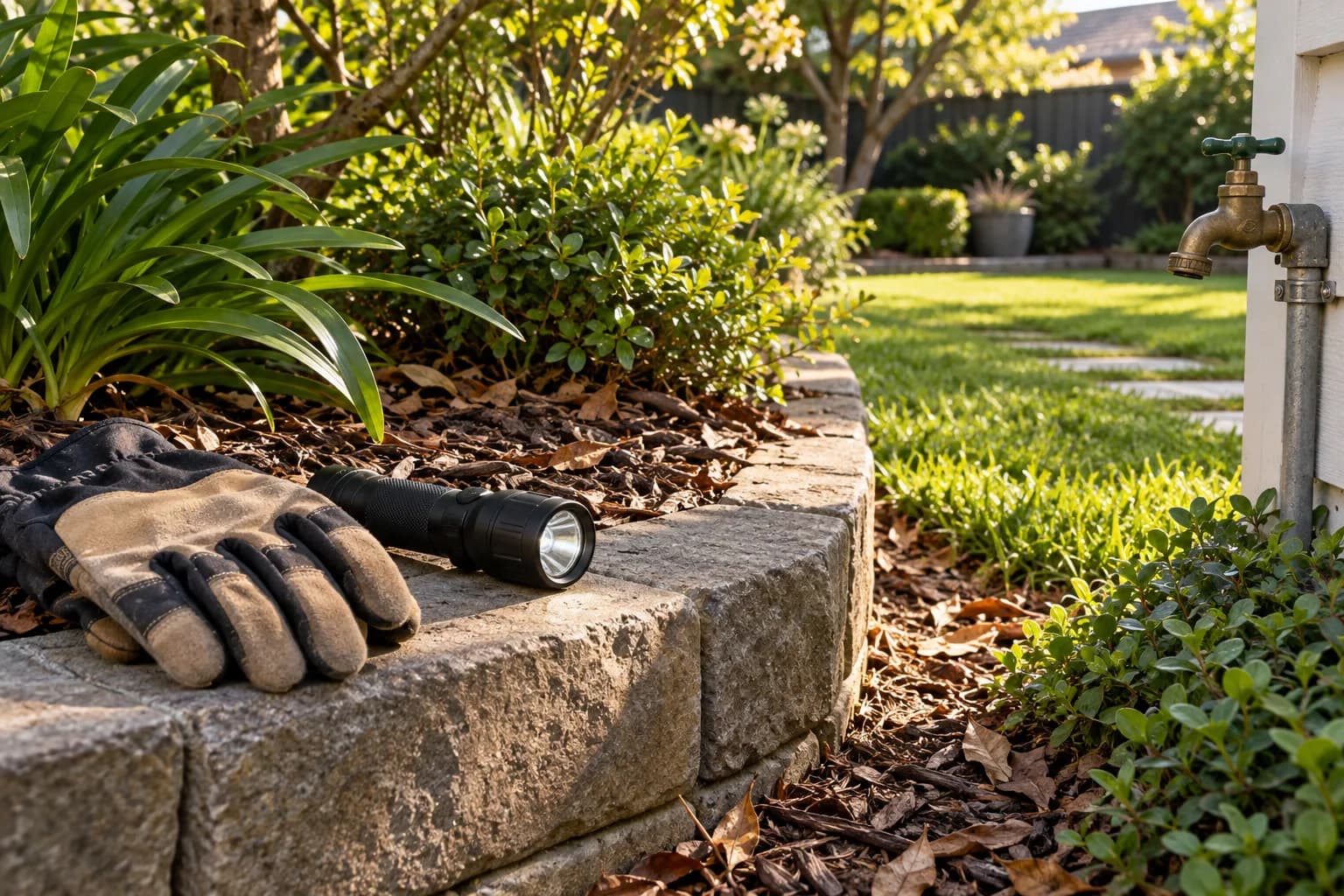 Dense shrubs, mulch and stone walls close to the house give spiders cover right up to the siding.
The Role of Integrated Pest Management (IPM) in spider control.
Ask your pro if they follow IPM principles. Many professional companies, use IPM protocols. IPM minimizes pesticide use and is safer for families, pets, and the environment. if needed, chemical treatments are applied strategically, not broadcast everywhere. Sanitation (decluttering, vacuuming) removes hiding spots. Next, sealing gaps—sealing cracks and gaps—reduces future invasions. For spiders, IPM starts with inspection to identify species, entry points, and hiding spots. Integrated Pest Management (IPM) is a holistic approach that combines prevention, monitoring, and targeted treatments.
Seasonal Spider Activity and Treatment Timing.
Tailoring treatment timing to your region increases effectiveness. In colder regions, they seek warmth indoors earlier. In warmer climates like the Southern US, spiders are active longer. However, treatments can be done year-round. Therefore, the best time for professional treatment is early fall to prevent mating and egg-laying, and again in spring to kill hatched spiderlings. Females lay egg sacs in fall, which overwinter and hatch in spring. This is when you’re most likely to see them indoors. Spider activity peaks in late summer through fall (August to October) when males leave their webs to mate.
spider control in Multi-Unit Dwellings: A Landlord's Guide.
Most pest control companies offer discounted rates for multi-unit contracts. This proactive approach reduces complaints and protects your property’s reputation. Include spider control in your pest management contract. Professional treatments should be scheduled quarterly and coordinated across units. Educate tenants: encourage them to report sightings, reduce clutter, and avoid storing boxes on floors. Regular inspections of common areas (basements, laundry rooms, storage) are essential. A single infested unit can affect the whole building. Landlords face unique challenges: spiders can move between units through wall voids, gaps around pipes, and shared attics.
What affects the price
- Home size: Larger homes require more time and product, increasing cost.
- Severity of infestation: Heavy infestations may need multiple treatments.
- Type of spider: Treatments for black widows or brown recluses may require specialized products or more thorough sealing gaps.
- Accessibility: Crawl spaces, attics, and cluttered areas add labor.
- Regional labor rates: Costs vary by location (e.g., higher in urban areas).
- workmanship warranty: Companies offering follow-up treatment (ask what is included) may charge more upfront.
- Season: Fall is peak season; demand may raise prices.
📊
What concerns you most about spiders in your home?
When to call for help
Also call if you or a family member has been bitten and you suspect a dangerous species. Most companies offer no-charge inspection—so you have nothing to lose. Call a professional pest control company if you see black widows or brown recluses, if spider sightings are frequent (multiple per day), if you find egg sacs, or if DIY methods fail after a few weeks.
What you can do yourself
If you’re dealing with dangerous species, call a pro immediately—your health isn’t worth the risk. The cost of a professional treatment ($150–$400) is often worth the peace of mind and results that vary by property and pro. For example, a pro can treat wall voids and crawl spaces where spiders breed. Professional treatments use longer-lasting, more effective products and include sealing work that most homeowners overlook. However, spiders are masters of hiding and can quickly repopulate from undisturbed areas. DIY spider control can work for light infestations: vacuum webs, seal cracks, reduce clutter, use sticky traps, and apply diatomaceous earth.
Where you live matters
For example, in Florida, spiders are active year-round, while in Minnesota, fall treatments are critical. Your local pest control company can advise on region-specific species and treatment timings. Regardless of region, spider control follows the same principles: seal entry points, reduce clutter, and eliminate prey. In the Southwest, black widows thrive in dry climates. The Pacific Northwest sees fewer venomous spiders but high populations of giant house spiders (Eratigena atrica) that can be alarming. In the South and Midwest, brown recluses are a real concern, especially in rural areas. In the Northeast, common house spiders and cellar spiders are typical, but black widows are less common. Spider populations vary across the US.
Simple ways to keep spiders away
- Seal all cracks and gaps around windows, doors, pipes, and foundations with caulk or weatherstripping.
- Install door sweeps and repair torn screens.
- Reduce outdoor lighting that attracts insects (spiders' food); use yellow or sodium vapor lights instead.
- Remove clutter in basements, attics, and garages—spiders love cardboard boxes and storage piles.
- Keep vegetation trimmed away from the house; store firewood at least 20 feet from the foundation.
- Vacuum regularly, especially corners, under furniture, and behind appliances.
- Use dehumidifiers in damp areas (basements, crawl spaces) to make conditions less favorable.
 Compare quotes on what they include: web removal, treatment, sealing and any follow-up visit.
Did you know?
Weight for weight, spider silk is stronger than steel.
Spiders can't chew. They liquefy a meal first and drink it.
You don't swallow spiders in your sleep. That one is a myth.
Questions people ask
What is the best way to keep spiders out of my home?
For persistent problems, professional perimeter treatments are very effective. Keep your home clean and clutter-free, and vacuum regularly. Install door sweeps, repair screens, and reduce outdoor lighting that attracts insects. Seal cracks and gaps around windows, doors, and foundations.
Are spiders dangerous to my family or pets?
Keep pets from playing with spiders; if bitten, seek veterinary care. Bites are rare. Black widow venom can cause pain and muscle cramps; brown recluse venom can cause skin necrosis. Only black widows and brown recluses are medically significant. Most US spiders are harmless.
How often should I get professional spider control?
Many companies offer follow-up treatment (ask what is included) between scheduled visits if spiders reappear. In heavy infestations or for venomous species, monthly treatments may be needed initially. Quarterly treatments (every 3 months) are standard for prevention.
Can I get rid of spiders myself?
Professional treatments are more thorough and long-lasting, especially for dangerous species. But DIY often misses hidden spiders and egg sacs. For light infestations, yes: vacuum webs, use sticky traps, apply diatomaceous earth, and seal cracks.
What attracts spiders to my home?
Moisture (leaky pipes, damp basements) also draws them. Outdoor lighting attracts insects, which in turn attract spiders. They are attracted to dark, undisturbed areas like basements, attics, and closets. Spiders come indoors for food (other insects) and shelter.
How do I know if I have a brown recluse infestation?
Do not try to catch them yourself. If you suspect an infestation, contact a professional for identification and treatment. They build irregular, messy webs in undisturbed areas. They have six eyes arranged in three pairs. Brown recluses are tan to brown with a violin-shaped marking on the back.
Do spider sprays work?
For best results, combine sprays with sealing gaps and sanitation. Residual sprays from professionals last longer and are applied to cracks and voids where spiders hide. Over-the-counter sprays can kill spiders on contact, but they often don't reach hidden spiders or egg sacs.
How much does professional spider control cost?
A typical service includes a no-charge inspection and written warranty terms that vary by pro. Some companies offer no-charge inspection. Typical costs range from $150 to $400 for an interior/exterior treatment, depending on home size and infestation severity.
Was it really a spider bite?
If a sore is spreading, warm or draining, treat it as a possible infection and see a doctor rather than assuming a spider. The figures describe clinic patients with overlapping diagnoses, not bite rates in the community. In Suchard's study of 182 patients who came to one California emergency department with a suspected spider bite between January 2006 and November 2007, published in 2011, only 3.8% were diagnosed as spider bites, while 85.7% were diagnosed as infections, most often skin infections. Probably not.
What does a severe spider infestation cost to treat?
In Spider Prevention, most spiders are harmless and beneficial, so the goal is usually to remove the webs and egg sacs and reduce the insects they feed on. In Spider Prevention, only the black widow and brown recluse are medically significant in the U.S., and they are identified by their markings.
Sources (12)
The facts in this article come from the public sources listed above. Every home is different, so ask the company you talk to about pricing and what’s included. Published by Spider Exterminator · Updated September 11, 2026 · How we write these guides