The short version
Professional spider control typically involves a thorough inspection, targeted exterior and interior treatments with residual insecticides, dusting in voids, and sealing entry points. Costs range from $150–$400, with no-charge inspection and workmanship warranties available.
- Only black widows and brown recluses pose medical risks; most spiders are harmless pest controllers.
- Professional treatment is more effective than DIY due to residual products and sealing techniques.
- Peak spider season is late summer through fall; proactive treatment in early fall reduces indoor invasions.
- Cost depends on home size, infestation level, and treatment type; expect $150–$400 for standard service.
- no-charge inspection and workmanship warranties offer peace of mind; Ask about a no-charge inspection.
- Research: In its January 2025 U.S. cost guide, Local quotes vary; ask for a written estimate.
This guide is for homeowners, families with children or pets, landlords, and anyone tired of seeing spider webs in corners, basements, or garages. If you live in an area where black widows or brown recluses are a concern, or simply want to reduce the number of spiders indoors, professional treatment provides a safe, effective solution.
What to look for
Spiders become most visible in late summer and fall as males roam to mate and seek warm shelter. They enter homes through cracks, gaps under doors, vents, and around windows. While most house spiders are not aggressive, the two medically significant groups—black widow and brown recluse—can cause serious bites. Black widows are found nationwide but are more common in warmer states; brown recluses are concentrated in the central and southern U.S., from Nebraska to Texas and eastward to Georgia. Misidentification often leads to unnecessary fear, but proper control reduces risk.
- 1Webs in corners, window frames, basements, or attics.
- 2Sightings of live spiders, especially multiple over a short period.
- 3Egg sacs (silken balls) in hidden areas like behind furniture or in closets.
- 4Small insects or insect remains caught in webs, indicating a food source.
- 5Shed exoskeletons (molts) near baseboards or in storage areas.
- 6Bite marks or skin reactions (rare, but seek medical attention if severe).
- 7Nocturnal activity: spiders often move at night; finding them in sinks or bathtubs indicates travel.
Why it’s worth acting soon
- Increased spider population as they breed indoors.
- Higher risk of encountering black widows or brown recluses in vulnerable areas.
- Bites that may require medical treatment, especially for children and pets.
- Damage to reputation for landlords or property managers.
- Psychological distress for arachnophobic occupants.
in the U.S. are the black widow and brown recluseMedically significant spidersUS CDC Treatment options and typical costs
Exterior Residual Barrier Spray
$150–$300
A licensed technician applies a liquid insecticide around the foundation, windows, doors, and eaves. The product leaves a residual film that kills spiders on contact and deters new ones. It also targets the insects spiders eat, reducing the food source.
- Time
- Lasts 1–3 months; reapplication recommended quarterly or seasonally
- Best for
- Preventative control in homes with mild to moderate spider activity
Interior Targeted Treatment & Dusting
$200–$400
For active indoor infestations, technicians apply low-odor aerosols to baseboards, corners, and cracks. In attics, crawlspaces, and wall voids, they use dusts (e.g., silica gel) that remain effective for months. This method reaches hidden spiders and egg sacs.
- Time
- Lasts 2–4 months; often combined with exterior treatment
- Best for
- Homes with established indoor spider populations or specific problem areas
Comprehensive Sealing gaps & Web Removal
$150–$350 (included in many service packages)
Technicians seal cracks and gaps with caulk, install door sweeps, repair screens, and remove webs using a brush or vacuum. This non-chemical approach is often paired with treatments to maximize effectiveness.
- Time
- Permanent structural fixes; web removal provides immediate visual relief
- Best for
- Long-term reduction and customers preferring low-chemical options
Seasonal Maintenance Program
$300–$600 per year (varies by frequency and home size)
Quarterly or bi-monthly visits that include exterior spraying, interior spot treatment, and inspection. Programs often include a workmanship warranty: if spiders return between visits, the company retreats at no charge.
- Time
- Ongoing; each visit lasts 20–45 minutes
- Best for
- Year-round peace of mind for high-risk areas or recurring issues
Prices are typical published ranges. Ask what’s included before you compare quotes.
 Where brown recluses live, they like quiet spots under beds and furniture, so a flashlight check along the frame is worth a minute.
How Professional Spider Treatment Works Step by Step.
For interior infestations, they use a low-odor aerosol in corners, behind furniture, and along baseboards. In attics and crawlspaces, they apply dust formulations that cling to surfaces and kill spiders that walk through them. they seal cracks and gaps with caulk and may install door sweeps. The entire process takes 30–60 minutes for a typical home, with results noticeable within a few days. A licensed technician begins with a thorough inspection of both interior and exterior. They identify spider species, locate webs, egg sacs, and entry points. The technician then removes visible webs and egg sacs using a brush or vacuum. Next, they apply a residual liquid insecticide around the perimeter, focusing on eaves, window frames, door frames, and foundation cracks.
Understanding the Biology of House Spiders.
Spiders cannot chew solid food; they inject digestive enzymes into prey and then suck up the liquefied remains. This means they don't damage structures or fabrics, but their webs and droppings can be a nuisance. Understanding their life cycle helps in treatment: spiders live one to two years, and females lay multiple egg sacs containing dozens to hundreds of eggs. Targeting egg sacs is crucial for long-term control. Spiders are arachnids, not insects. They have eight legs, two body segments, and produce silk from spinnerets. Most household spiders are web-builders (like cobweb spiders) or hunters (like wolf spiders). They feed primarily on insects, so reducing other pests helps control spiders.
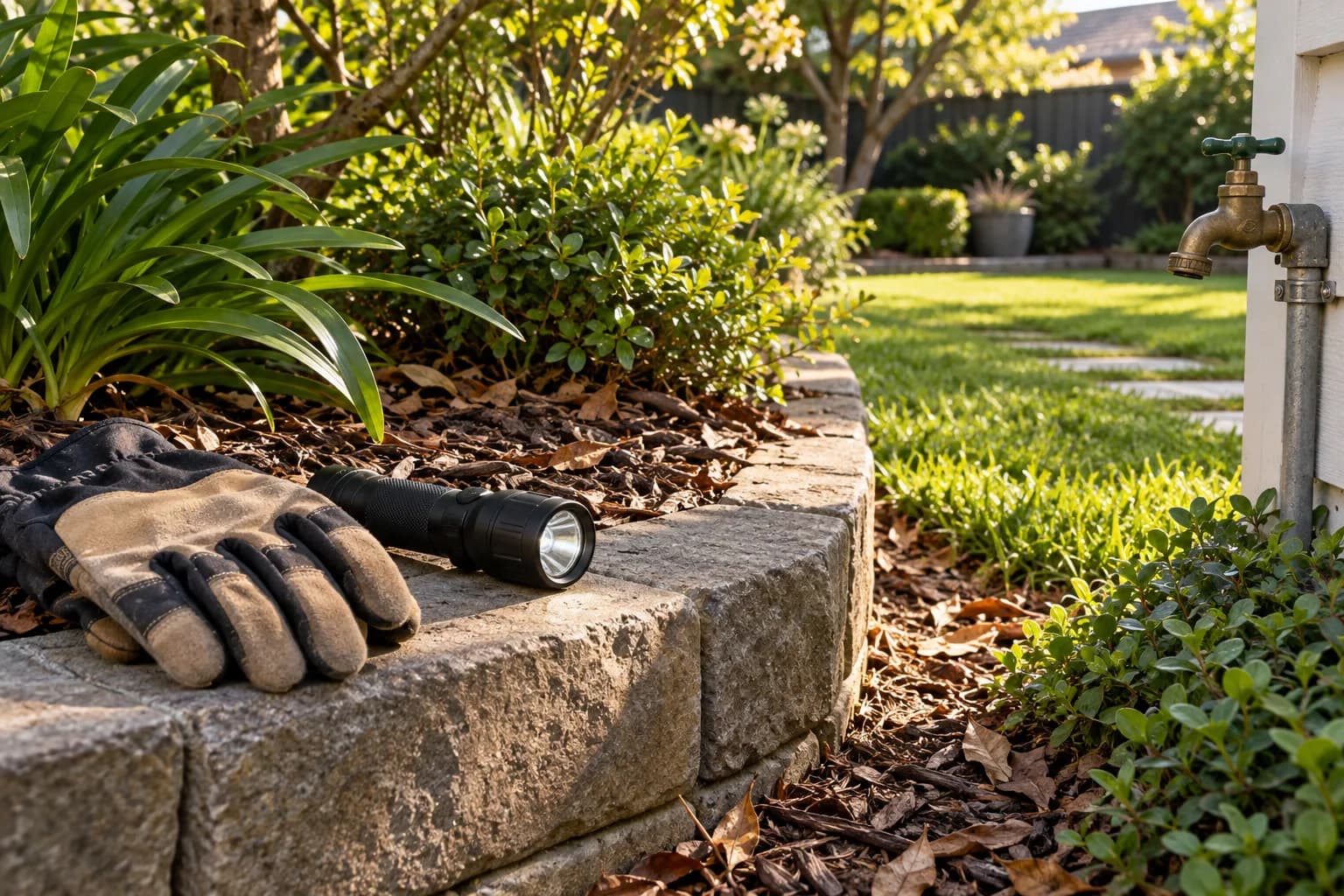 Dense shrubs, mulch and stone walls close to the house give spiders cover right up to the siding.
Regional Differences in Spider Species and Control Strategies.
Treatment focuses on sealing gaps and reducing moisture. In the Southwest, black widows thrive in dry, warm conditions; technicians pay special attention to garages, sheds, and outdoor furniture. In the Midwest and South, brown recluse is a primary concern. Control requires aggressive interior dusting and glue traps to monitor populations. In the Northeast, cellar spiders and wolf spiders are common; exterior barriers are effective. Knowing the local species allows technicians to tailor treatment methods and products. In the Pacific Northwest, giant house spiders and hobo spiders are common, though hobo spider venom is less dangerous than once thought.
The Role of Sealing gaps in Long-Term Spider Management.
Door sweeps and weatherstripping are also critical. Sealing gaps also involves reducing hiding spots: removing woodpiles, debris, and tall grass near the foundation. While chemical treatments kill existing spiders, sealing gaps prevents new ones from entering. Most professional services include basic sealing gaps in their treatment, but extensive sealing gaps may be an add-on service. Sealing gaps is the most effective long-term strategy. Spiders enter through gaps as small as 1/16 inch. Common entry points include gaps under doors, around utility lines, vents, and windows. Technicians use copper mesh, caulk, and expanding foam to seal these openings.
Safety Considerations for Families with Children and Pets.
Technicians apply treatments in a way that minimizes exposure: they avoid treating surfaces that children or pets touch, and they use low-odor formulations. Interior treatments are often applied as dusts in voids or as spot treatments in cracks. Glue traps can be placed in inaccessible areas. Pet owners should inform the technician about specific sensitivities. After treatment, the home is typically safe to re-enter after the product dries (usually 1–2 hours). Companies that offer no-charge inspection and workmanship warranties prioritize safety and customer education. Professional pest control companies use products approved by the EPA for residential use.
What affects the price
- Home size and layout (square footage, number of stories).
- Severity of infestation (few webs vs. heavy populations).
- Treatment type (barrier spray vs. interior dusting vs. full sealing gaps).
- Geographic region (pest control services cost more in urban areas).
- Accessibility (crawlspaces, attics, or high ceilings may add labor).
- Number of treatments needed (one-time vs. quarterly program).
- workmanship warranty inclusion (some companies charge extra for retreats).
📊
What's your biggest concern about spiders in your home?
When to call for help
For landlords, regular professional treatment prevents tenant complaints and liability. Most companies offer no-charge inspection. Call a professional if you see multiple spiders daily, find egg sacs, suspect black widow or brown recluse activity, or have children or pets at risk.
What you can do yourself
However, over-the-counter products often lack the residual effect of professional-grade insecticides and may not reach hidden spiders. DIY spider control can work for minor issues using sprays, traps, and caulk. Many companies offer a workmanship warranty, meaning if spiders return, they retreat free. For persistent problems or venomous spiders, professional service is worth the cost. Professionals have training to identify species, locate entry points, and apply treatments safely.
Where you live matters
In the Northeast, cellar spiders and cobweb spiders are common; treatment focuses on exterior barriers and moisture control. Regardless of region, the peak season is late summer through fall when males wander indoors. Scheduling a treatment in early fall can significantly reduce indoor sightings. For those living in multi-unit buildings, such as apartments, coordination with neighbors may be necessary for effective control. Landlords should consider quarterly treatments to keep tenants satisfied and avoid liability from bites. In the United States, spider control strategies vary by region due to climate and species. For example, homes in the humid Southeast often deal with large wolf spiders and orb-weavers, while the arid Southwest sees more black widows. In the central states, brown recluse is a serious concern, especially in older homes with many hiding spots. Technicians in these areas use glue traps to monitor populations and apply dusts in wall voids.
Simple ways to keep spiders away
- Seal cracks around windows, doors, and foundations with weather-resistant caulk.
- Install door sweeps and repair torn window screens.
- Reduce outdoor lighting that attracts insects (spider food); use yellow bug bulbs.
- Remove clutter, boxes, and woodpiles from around the house exterior.
- Vacuum webs and egg sacs regularly; dispose of vacuum bag outside.
- Keep basements, attics, and garages dry (spiders prefer humid environments).
- Trim shrubs and tree branches away from the house to reduce bridge routes.
 Spiders found in a bathtub or vanity usually wandered in from a gap behind the plumbing, not up the drain.
Did you know?
Weight for weight, spider silk is stronger than steel.
Spiders can't chew. They liquefy a meal first and drink it.
A female black widow can produce several egg sacs in a season, each holding a few hundred eggs.
Questions people ask
What is the best time of year for spider control?
Late summer to early fall is ideal, as spiders become more active and seek shelter indoors. A treatment in August or September can prevent fall invasions.
Are professional spider treatments safe for pets?
Products are EPA-approved and applied in targeted areas away from pets. Keep pets out of treated rooms until dry (usually 1–2 hours). Yes, when applied by a licensed technician.
How long does a spider treatment last?
Exterior barriers last 1–3 months; interior dusts can last 2–4 months. Quarterly treatments are recommended for continuous protection.
Will spider control eliminate all spiders in my home?
No, it drastically reduces populations and prevents new entries, but some spiders may remain in hidden areas. Ongoing maintenance and sealing gaps are key.
What should I do if I see a black widow or brown recluse?
These spiders are reclusive but can bite if threatened. Some companies offer no-charge inspection, so ask. Do not attempt to handle it. Contact a professional immediately.
Can I do spider control myself?
Use glue traps, seal cracks, and reduce clutter. For persistent problems or venomous species, professional treatment is more effective and safer. For minor issues, yes.
Do spider treatments also kill the insects spiders eat?
Yes, many exterior treatments target a broad range of insects, which reduces the food source and indirectly helps control spiders.
How do I prepare my home for a spider treatment?
The technician will give specific instructions. Ensure pets and children are away during treatment. Remove clutter from floors, vacuum webs, and clean corners.
Is monthly spider control worth it?
In Spider Treatment, most spiders are harmless and beneficial, so the goal is usually to remove the webs and egg sacs and reduce the insects they feed on. In Spider Treatment, only the black widow and brown recluse are medically significant in the U.S., and they are identified by their markings.
Sources (12)
The facts in this article come from the public sources listed above. Every home is different, so ask the company you talk to about pricing and what’s included. Published by Spider Exterminator · Updated September 11, 2026 · How we write these guides